Wisson Launches "Pliabot® Charge" Universal AutomaticCharging Service Engine, Pioneering "Chaos Service" with "0.000sStepless Tolerance Adaptation" to Solve All Scenarios
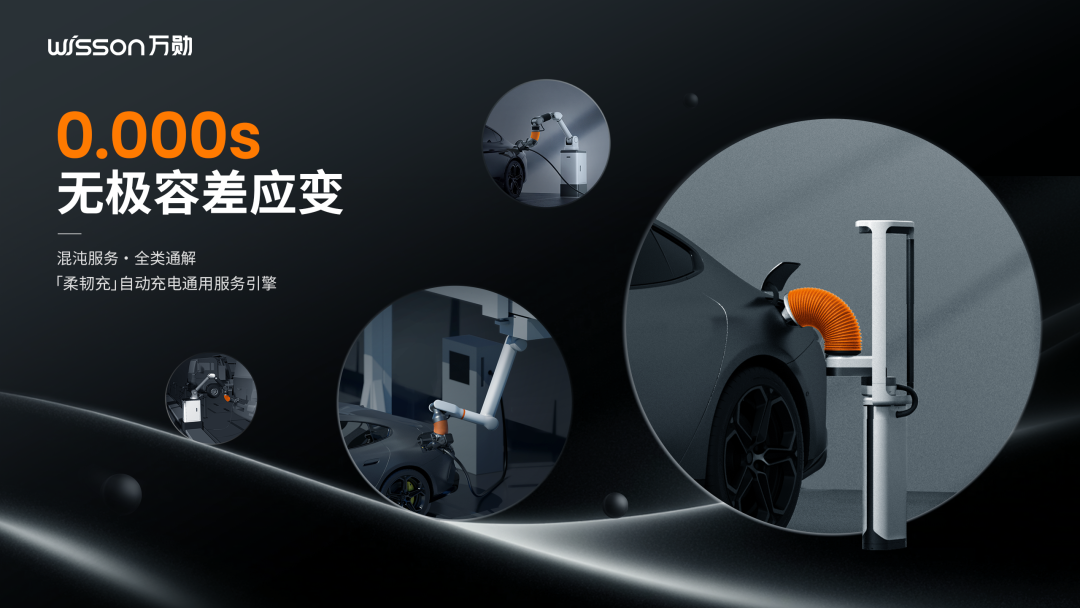
On July 9, Wisson held a business strategy launch event in Beijingfor its automatic charging robots, unveiling the industry's first"Pliabot® Charge" Universal Automatic Charging Service Engine and itscore products. This engine covers all application categories—public, commercial, and residential—throughan innovative "Chaos Service" model. Its unique "0.000s steplesstolerance adaptation" technological capability was fully demonstratedthrough three "world's first" application achievements released simultaneously,officially providing the industry with a universal solution that breaks throughthe core bottlenecks hindering large-scale commercial deployment across allautomatic charging scenarios.
**The Chaotic Uncertainty of Constant Change Poses "ResponseSpeed" as the Core Challenge for Automatic Charging Scenarios**
Currently, while automatic charging demonstrations and conceptproducts are emerging rapidly, true large-scale commercial deployment remainsjust out of reach. The core reason lies in the transition from controlleddemonstrations to complex real-world applications—thisis no longer a simple "plugging into a socket" performance, but atypical "real-world chaos" operation characterized by highuncertainty and low controllability. Outdoor and indoor environments, rain,snow, wind, frost, day-night cycles, and varying lighting conditions createenvironmental chaos and unpredictability. Hundreds of brands, vehicle models,and charger types, each with different charging port locations, cover openingmethods, and interface standards, constitute a massive and dynamically growingcollection of "non-standard object combinations." The angle,distance, and tilt of each parked vehicle vary each time, while passengersentering and exiting, pedestrians and pets passing by, and neighboring vehiclessuddenly opening doors or reversing fill the scene with completely randomdynamic disturbances.
When entering the three major commercial operating environments—commercial, public, and residential—the"chaotic uncertainty" of automatic charging scenarios presentsdistinct challenges: Commercial charging needs (e.g., unmanned heavy trucks,unmanned mining trucks, unmanned buses) involve relatively controllable usagepatterns but often face harsh and variable environments. Residential chargingtypically corresponds to specific brands and models, but operating environmentsand individual usage habits vary widely and are unpredictable. The mostchallenging scenario is likely public automatic charging, which involves adiverse range of user groups—individual car owners,commercial fleet operators, robotaxis, unmanned logistics vehicles, andgovernment test vehicles—leading to exponentiallygrowing on-site variations and operational complexity that ultimately exceedsthe capability envelope of any accumulation of precision and computing power.
This massive, ever-changing real-world chaos ultimately manifests asfour red-line challenges and the core "response speed" hurdle thatmust be overcome for large-scale commercial deployment: **Safety Interaction**—under no circumstances should it harm people, vehicles, or chargingports; **High Tolerance Rate**—regardless ofinstantaneous environmental and usage changes, it must simultaneously ensurereliability, stability, and success rates; **Environmental Resilience**—stable operation across various harsh or extreme environments;**Easy Deployment and Maintenance**—eliminating highretrofitting costs and unexpected lockups. This dictates that any automaticcharging robot capable of true commercial-scale deployment must possessnear-zero-latency ultra-high response speed and extremely powerful adaptabilityin its perception, control, and decision-making capabilities to maintain systemstability under complex operational scenarios and environmental factors,ensuring safe and successful operations.
**0.000s Stepless Tolerance Adaptation: Universal Service EngineEnables "Chaos Service, All-Scenario Solutions"**
To address the inherent chaotic uncertainty of automatic chargingscenarios and the extreme demands for "response speed" in externalenvironment interaction, Wisson's newly launched "Pliabot® Charge"Universal Automatic Charging Service Engine leverages the bionic flexiblestructure of the Pliabot® embodied architecture, along with adaptive passiveflexibility and neuronic multimodal AI. It achieves the industry's unique0.000s stepless tolerance adaptation, genuinely meeting the ultra-fast responserequirements for environmental chaos, massive non-standard object combinations,and random dynamic disturbances. This opens up a completely new "ChaosService" model characterized by infinite adaptability and shape-shiftingresponsiveness. This paradigm-shifting breakthrough not only perfectlysurmounts the four red-line barriers of safety, tolerance, environment, anddeployment but also enables a single technical approach and a limited number ofcore products to effortlessly cover all application categories and sub-scenariosof automatic charging.
Behind 0.000s stepless tolerance adaptation lies Wisson'sworld-leading Pliabot® embodied intelligence's overwhelming advantage inabsolute safety and task adaptability. In traditional approaches, embodiedintelligence architectures based on rigid motor-driven joints are built on theprecision of mechanical transmission, imposing extremely high requirements onthe entire "perception-recognition-reasoning-execution" pipeline.This makes it difficult to simultaneously achieve rapid response to real-timechanges during tasks while maintaining safety and low cost—especially for the transient operation of plugging/unplugging,completed within 1-2 seconds. Even with sufficiently precise pre-plannedtrajectories, the inevitable random force field disturbances during actualoperations cause each action to differ, requiring continuous real-timeadaptation and adjustment. The rigid intelligence architecture's"hundred-millisecond full-loop reflex arc"—fromsensing force changes to completing reasoning and generating execution actions—inevitably struggles in ever-changing real-world chaos, leading to aseries of problems such as insertion failure, stuck guns, and pinched hands dueto insufficient response speed. In contrast, the "Pliabot® Charge"Universal Automatic Charging Service Engine employs bionic muscle flexiblestructures with multiple flexibilities (material flexibility and gascompressibility), featuring lightweight, soft, collision-safe adaptive passiveflexibility, and neuronic multimodal AI that requires low AI costs and enablesrapid deployment across multiple scenarios. Through its dual-helix responsemechanism of "inherent flexibility + real-time distributed intelligenttrajectory generation," it reduces the response time at the first interactioncontact point to 0.000 seconds, genuinely achieving infinite adaptability andreal-time responsive operations.
Driven by this engine, Wisson has launched core products andsolutions covering all three major categories of automatic charging—public, commercial, and residential—includingthe fixed CF1 and sliding CS1 models. These have rapidly completed variousdeployment applications for leading customers, ranging from single-pointdemonstrations to unmanned ports, mining areas, robotaxis, robobuses, high-endcommercial facilities, and residential use. Currently, Wisson is strategicallytargeting "full coverage of unmanned autonomous driving scenarios"for its automatic charging business line, collaborating deeply with OEMs,charging station operators, energy infrastructure providers, unmanned operationoperators, and local governments to accelerate the deployment of all-category,all-scenario solutions, helping customers across industries realize theirunmanned operational visions.
**Challenging the Industry's Limits: Three "World Firsts"Demonstrate the Disruptive Advantages of the Universal Service Engine**
At this launch event, Wisson unveiled three "world'sfirst" products/applications based on the "Pliabot® Charge"Universal Automatic Charging Service Engine, targeting the public, commercial,and residential categories. These irrefutable commercial deploymentachievements showcase the disruptive advantages of "Chaos Service,All-Scenario Solutions":
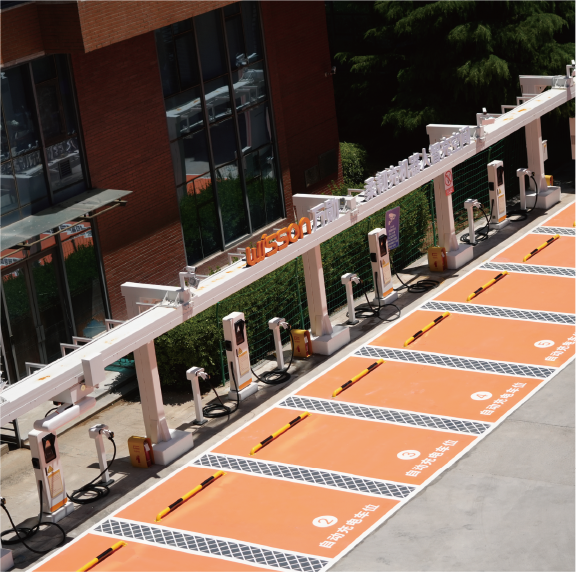
**【Public】130+Vehicle Models and 3 Million Services—World's FirstPublic Automatic Charging Station.** Public automatic charging faces hundredsof continuously growing brands and models, vastly different owner groups andusage habits, and random environmental variables such as day-night cycles,rain, snow, wind, and frost. Its extreme massive variability is the "crownjewel" of automatic charging scenarios. At this event, Wisson unveiled theYizhuang International Biomedical Park automatic charging station in Beijing.Built on the "Pliabot® Charge" Universal Automatic Charging ServiceEngine, it is the world's first fully commercial, 24/7 automatic chargingstation open to the public without restrictions on brand or model. Its core solutionhas successfully adapted to serve over 130 vehicle models across variousbrands, completing a cumulative 3 million verification services. The station isnot only openly accessible to all individual car owners for free trials but isalso actively collaborating with government agencies, automakers, robotaxioperators, and unmanned logistics companies to empower the accelerateddeployment of unmanned operations and smart mobility.
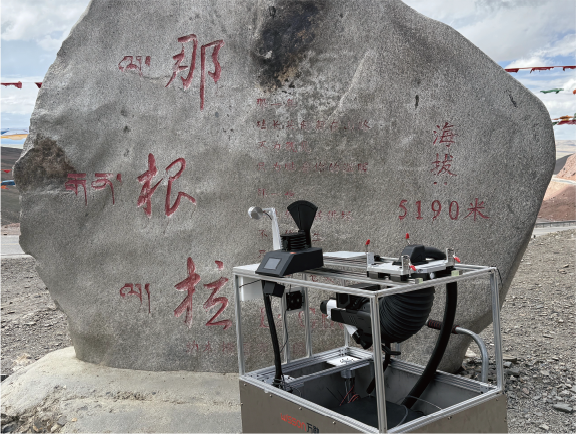
**【Commercial】At5,190 Meters Altitude and 52.9% Standard Atmospheric Pressure—World's First Automatic Charging in Extreme Environments.**Commercial scenarios such as mining areas, ports, and bus depots often faceharsh, variable, or mixed operating environments. Particularly under extremeconditions like high altitude and low atmospheric pressure, traditionalsolutions are prone to sensor failure. Recently, Wisson deployed its automaticcharging product for the first time on a snowy plateau at an altitude of 5,190meters with only 52.9% of standard atmospheric pressure. Leveraging its"Chaos Service" characteristics and bionic flexible materials' highenvironmental tolerance, it successfully completed multi-task automaticcharging operation tests. This makes it the world's first automatic chargingrobot case to complete stable operations in high-altitude extreme scenarios,not only redefining the industry's environmental tolerance limits but alsoachieving unmatched compatibility across all conventional and harsh operatingconditions through its ability to conquer severe plateau conditions. Thisprovides a truly one-size-fits-all solution for all types of commercialcharging needs.
【Residential】18-DOF, 10cm Ultra-Slim—World's First Residential Automatic Charging Robot Integrated withTesla.** Residential automatic charging has long been highly anticipated bymany car owners, but real-world deployment faces challenges such as limitedinstallation space, variable usage habits, and numerous unexpected factors. Atthis launch event, Wisson officially unveiled for the first time the world'sfirst automatic charging robot that is fully integrated with Tesla's vehiclesystem. Powered by Pliabot® technology, it easily achieves 18 degrees offreedom with inherent safety features that prevent damage to vehicles orpinching of hands. Its ultra-slim body is only 10cm thick, and car owners caneasily install it themselves in just 30 minutes through a DIY process. Thisperfectly realizes reliable, safe, and user-friendly deployment of automaticcharging services in residential settings. According to the plan, this productwill be officially released in the second half of this year, with global salescommencing at the CES 2027 exhibition in January 2027. Further details will beannounced progressively.
From over 5,000 meters above sea level in extreme high-altituderegions, to bustling urban public charging stations, and to cozy privateparking spaces—every instance of zero-latency andself-adaptation in automatic charging robots is technology's response to thefuture. Wisson's "Pliabot® Charge" Universal Automatic ChargingService Engine, built on the foundation of Pliabot® embodied intelligence,truly realizes a "Chaos Service" that is unrestricted by environment,scenario, model, or user, providing all-scenario solutions. It activelysupports partners including OEMs, charging station operators, energyinfrastructure providers, unmanned operation operators, and local governmentsin accelerating the deployment of automatic charging across all scenarios—unmanned mining areas, ports, transportation hubs, robotaxis,robobuses, public charging stations, urban commercial complexes, governmentdemonstration stations, residential charging, and more—usheringin a new era of truly unmanned autonomous driving.